Showing posts with label Bulgaria. Show all posts

Friday, 5 August 2022

Unwanted and Unwelcome? Bulgarian LGBTI+ migrants speak

(Originally published in Bulgarian on Out.bg on 5 November 2021)


At the end of July, we began publishing the series Unwanted and Unwelcome[1] whose aim was to provide a space for LGBTI+ Bulgarians who live abroad to speak about their experiences with migration. The series remains open and we would love to continue publishing your stories (if you’re interested in contributing, see more here). However, after publishing 19 stories, I decided to write this article, in which I share my impressions and conclusions of the series as a guest editor.

The idea for the series was born out of several discussions I witnessed in LGBTI+ groups on Facebook. I don’t remember the specific comments but they were familiar to many Bulgarians: “I can’t stand it here anymore”, “I’m thinking about leaving”, “I’m tired of this country”, “the only way out is Terminal 1 or Terminal 2 [of Sofia airport]” and so on. The reasons for these comments are also familiar to everyone: the shamefully low salaries and pensions, the drained social and healthcare systems, the ubiquitous corruption, and the many problems with democracy and rule of law. For people in the LGBTI+ groups, however, there was another, just as important, reason: the lack of social acceptance and legal protections for LGBTI+ people, the constant insults hurled at us in the media and public space, the violence or threats of violence, and the deafening silence by political and social figures.

I’m interested in the topic of migration both personally and professionally: I’ve been living abroad for twelve years and I work in the field of migration and human rights. I’ve noticed that migration is highly visible and on the minds of many people in Bulgaria – not only through comments like the ones above. In villages and small towns, houses that are bigger and prettier than most are often built with money remitted by migrants; while rundown houses and weeded yards probably belong to people who live abroad and don’t return anymore. Strangers or distant acquaintances you meet on the street spontaneously say things lie “there’s nobody left here” and “everyone went away” or ask you “where do you live now?” and go on to tell you where and how their children and relatives live. Practically everyone has stories of migration – their own or of their friends, family members, or neighbours.

At the same time, migration rarely features in public discourse – at least to the extent that I follow Bulgarian media. Occasionally, we hear about “Bulgarians abroad” (the most common way migrants are referred to) – how we are the largest source of direct foreign investment and how there should be a strategy to attract us back to the country. Rarely does anyone ask who we are, why we go abroad, how we live there and if or why we would return.

Therefore, the aim of Unwanted and Unwelcome was to touch upon these issues from the perspective of LGBTI+ people. We published a call for contributions where we invited LGBTI+ Bulgarians who live abroad to tell us about their new lives. We proposed concrete questions like why they migrated, how they live there, whether they miss Bulgaria, and whether homophobia played any part in their decisions and if yes, what, and whether they consider returning one day.

We wanted to provide a space for LGBTI+ people to tell their stories. This is important in itself: in the Bulgarian context, where we are constantly attacked and insulted, there’s a tendency for us to speak in defence – to explain that we’re not sick or crazy, that we don’t want to corrupt anyone’s children or destroy their families, that we need pride and legal protections, and so on. It’s not often that we have the opportunity to speak about our problems and successes the way we want to – regardless of whether they are related to our sexuality or gender identity or not. Besides, I strongly believe that there must be space in public discourse for the stories, views, and analyses of “regular” people – not just politicians, celebrities, or social media “influencers”.

A secondary aim of the series was to see if and to what extent homophobia in Bulgaria contributes to “brain drain” and prevents LGBTI+ emigrants from returning. And to travel a little – to get a brief idea of life in other countries from the perspective of fellow LGBTI+ Bulgarians.

I proposed Unwanted and Unwelcome as the series title because the phrase is well-known and catchy, and the eponymous novel by Ivan Vazov tells the story of Bulgarian émigrés. In a more literal sense, I was thinking how LGBTI+ Bulgarians may feel “unwanted and unwelcome” in our home village, city or country because of our sexual orientation or gender identity, and this may be one of the reasons to emigrate. In a new place, however, and especially in a new country, we may face other difficulties, like discrimination or suspicion, finding a job or community, learning a language and, in more extreme (but not rare) cases, isolation and exploitation. In other words, LGBTI+ Bulgarians may feel “unwanted and unwelcome” in our home country as LGBTI and abroad – as immigrants.

We published the stories of 19 people. They live in a total of eleven other countries – New Zealand, a country in East Asia, Thailand, a country in the EU, Germany, Denmark, The Netherlands, France, Spain, UK, and the US; one person who lives in Bulgaria now after studying in the Netherlands and Singapore; and one couple of a Bulgarian guy and a French guy who live in Bulgaria. Eleven contributors were men, six were women, and two were gender non-conforming. Seven sent us short stories and I interviewed twelve.

I hope that everyone who can do so will read all 19 stories. In this article, I won’t detail the main themes that came out in the stories but just share some of my conclusions. They are not new or surprising but I think it’s important to highlight them.

Most of the people who shared their stories love Bulgaria! Boyan said it explicitly and in other stories it became clear from things people talked about. Several said that they miss Bulgarian food, nature, the relaxed way of life, and the way people communicate and relate with each other. For example, Vicky said that in Bulgaria it’s much easier than in the US to make an appointment with friends (something I had experienced in the Netherlands). Everyone still has friends and relatives in Bulgaria, they think about the country, they follow the news and participate in the social and political life as much as possible. Tzetzo, Doro, Ivan, Darina and I are engaged with various organisations or projects. Those who have children are making sure that their children remain connected to Bulgaria: for example, both of Nick’s children have Bulgarian names, Vicky and Darina talk to their children in Bulgarian, which is also what Lilly intends to do when she has children someday. Clément seemed to know more about Bulgarian folklore dances than the average Bulgarian and together with his partner Nick, they constantly discover new pieces of Bulgarian nature, language, history, and cuisine.

I think it’s important to emphasise this because so-called “patriots”, “nationalists” or “keepers of traditional values” often imply that LGBTI+ people don’t love Bulgaria but only “the west”. This is not true. We love Bulgaria too but we want our society to accept us as its own citizens. In most of the stories, I didn’t feel resentment or hatred of Bulgaria but a mix of sadness and frustration from the lack of adequate legal protections or support from political parties or public figures, and the constant hatred and disinformation about us in the media and public discourse.

Most people had not emigrated specifically to escape homophobia and the lack of legal protections and social acceptance in Bulgaria but for several this was a significant reason. A.D., Vladi, Mitko, and Jasmina had witnessed or experienced violence and homophobia, Nick had wanted to avoid them, while Lilly, Vicky, and Darina just wanted to live in a country where their family would be recognised by the law. The lack of legal protections and social acceptance, however, were among the reasons why people did not want to return. For S.T., Boyan, and others who have, or hope to have, partners and children, returning to Bulgaria seemed unlikely.

Another, but related, reason for going or remaining abroad was the more general feeling that Bulgaria is “small” – that there is a lack of diversity of people and opinions, and most Bulgarians are narrow-minded. Peter, Lilly, Nick, and I noted that we live in multicultural cities or countries where there are people from all races, ethnicities, cultures, and nationalities and this enriches us and the countries where we live. This wasn’t just about the size of a country or city – yes, New York, London, or Bangkok have populations larger than Bulgaria’s. However, New Zealand and Denmark are smaller but Nick and Maya appreciated the diversity of people, religions, and views there. Additionally, A.D., Nick and I have Asian partners and were worried about returning to Bulgaria with them because our society is conservative towards people from other races. Others, like Stoyan and Danny, said that abroad they feel free to wear whatever clothes they like while in Bulgaria they have to put up with judgmental looks and comments.

I also want to reflect briefly on the process of preparing the series. Participants shared their stories with excitement, joy, and enthusiasm. Tzetzo said that he found the interview therapeutic; others shared stories that they had not shared before, at least not in front of a large audience. The series also helped create new connections – some participants discovered that they live in the same city or state and made plans to meet; others discovered that, even though on different continents, they share common experiences and connected to express support; still others found long-lost acquaintances or made new friends.

I think the series was also interesting for the LGBTI+ community in Bulgaria. The materials were among the most read ones on Out.bg. On social media, people commented, raised questions, and empathised with the stories. I joked that Unwanted and Unwelcome became like a TV show that some people eagerly await and discuss (we published new materials every Wednesday and Saturday, which contributed to my sense of it being like a TV show). But more seriously, my assumption that the community would be interested in reading the stories of “regular” LGBTI+ Bulgarians proved correct.

Based on these conclusions, I make two recommendations. First, this series provided concrete evidence that the lack of social acceptance and adequate legal protections forces some LGBTI+ Bulgarians to leave the country and stops others from returning. It is well-known that homophobia has negative impact on economic growth and this argument can no longer be dismissed as unrelated to Bulgaria; we now have real people whose stories confirmed this. The series can serve as a tool for LGBTI+ advocacy groups to use as another piece of evidence for the need to combat discrimination and homophobia in Bulgaria. It can also serve as an inspiration for organisations or researchers to conduct a larger, quantitative study on the reasons why LGBTI+ people leave the country or how homophobia affects Bulgarian economy and demographics.

And second, LGBTI+ organisations and media can continue with similar initiatives that provide space to LGBTI+ people to tell their stories. Storytelling is an established method for empowerment of marginalised groups and can contribute to community-building and to broader acceptance of LGBTI+ people in society. Stories help us see others as people just like us and recognise that there is more that unites us than divides us. As Nigerian feminist author Chimamanda Ngozi Adichie said during a lecture in the University of Cape Town, “How we relate to people who are different from us, people who we might never get to see, who we might never have a personal interaction with, is very much shaped by the stories we consume of those people, how they are portrayed in media, and it seems to me that because we are unfamiliar with the stories of one another, we are then unfamiliar with one another.”

Such initiatives can focus on intersecting identities, for example, people who are LGBTI and Roma, Muslim, immigrants, or with special needs. This may help foster alliances between social movements for rights and justice and lead to greater acceptance of LGBTI people in society. These undertakings should not simply be an invitation to send an essay because not everyone has a computer or the time and capacity to write. Interviews are time-consuming but as our series showed, rewarding.

I conclude with two more quotes from the above-mentioned lecture by Ngozi Adichie: “we need more stories because they have the power to change the world” and “here’s to a world in which not only do we tell more human stories but that we’re more open to hearing – actually hearing those human stories”.


[1] This is my own loose translation of Немили-недраги (Nemili-nedragi), the title of a nineteenth-century novel by Ivan Vazov that tells the story of Bulgarian revolutionaries exiled in Romania.

Monday, 12 June 2017

FLOB-bing on Sofia Gay Pride

So, Sofia Pride took place this last weekend and it was great! I watched the live stream from Bangkok. If you don't remember what a small-scale pride with 3000-people (that's a lot for Bulgaria, the biggest so far!) and not yet appropriated by corporations looks like, check out the latest videos on the Sofia Pride Facebook page. And this despite the announced neo-Nazi event to 'clean up Sofia streets of garbage' planned for the same place and same time as the Pride, which Sofia Municipality had allowed. 

See, friends, Sofia Pride is not really supported, or even acknowledged as a thing, by politicians in Bulgaria. Not by the mayor or city council. In fact, both the right-wing parties and the socialist party (which means something different in Bulgaria) actively opposed it. Several foreign ambassadors and the vice-mayor of Amsterdam were there. 

But that's not the what this post is about. It's about the musings of FLOB - defined by the Oxford Dictionaries as 'a piece of spittle and mucus that has been spat out' but used here as First Lady of Bulgaria or, in other words, the wife of Bulgarian President Rumen Radev - about the Pride. Apparently she shared these on her Facebook page and they were picked up by the media (for example, here) a couple of days later. I don't even want to comment on those musings, so I'll just offer a translation of her post here for you to judge her and the general level of political and social 'thought' in Bulgaria...

I took our six-year-old cat Charlie to the vet - just a routine check-up for flees and ticks. And just like that, out of nowhere, the vet asked if I wanted him checked for feline AIDS. I was shocked! I never even thought this disease affects cats. I asked him, and if the result is positive, what do we do then? He replied, nothing, you'll just know. There's no cure. I asked, is it infectious for people, for dogs? No, said the nice doctor, it's transmitted only through sex, among cats. 

Somehow by association I thought about the Pride and I hoped that the participants remember, just like that, among other things, to conduct an information and prevention campaign about HIV/AIDS, even if only with leaflets. Just because the statistics for 2016 show that 39% of new infections happened via heterosexual contact, 49% of new infections via homosexual contact and 12% via intravenous drug use. 


And the pride will be seen by many adolescent men and women and young children. 


And speaking of young children, I remembered that joke about Holmes and Watson: 
- What's that noise on the street, John? 
- Gay pride, sir. 
- What do they want? 
- Same-sex love, sir. 
- But who forbids them from having it, John?
- Nobody, sir!
- Then why are they shouting? 

You know the answer. Imagine if this conversation takes place between a mother and her child... Actually, to me, the Pride means to show that these people want to express their courage and even pride that they are different. This is worthy of respect! Brave, breaking the stereotypes, colourful and happy, all of them in one way or another gone under the rainbow. I have many such friends and we have very good relationships and a lot of respect for each other. Everyone is entitled to their choices. As long as they don't hurt anyone. 

I have nothing against homosexuals, bisexuals, transgenders and their derivatives. I'm against their pretension for difference. 

Dear Pride-goers, please don't forget the fact that we are all different. Regardless of whether we have hetero or homo orientation. DNA is the same only in the case of identical twins and even then not always. In all our veins runs a code different from that of our neighbour.

I respect you but please don't overdo it! Nobody has forbidden you anything! You are just as discriminated against as Bulgarian pensioners, for example. As mothers with multiple children. As hetero-oriented people, even. (Why don't we organise a Pride of heterosexuals, eh?)

If you really want to be more useful in society, next time, apart from the pink pompoms on your drums, organise some leaflets about HIV/AIDS prevention, risk groups and the statistics in the country and the world. I'm just giving you an idea, so that it becomes more meaningful for all of us.

Yes, life is too short to be taken seriously. But new generations come after us that we need to educate, inform, so that they can make the right choices.
P.S. Actually, I'm wondering if you, who are calling for tolerance and recognition, realised even for a moment that the day of your Pride was supposed to be a day of mourning, of humility and repentance. Because a military man died in times of peace. And became one with the rainbow (your professed symbol). This was a tragedy that filled our hearts with sadness and a lot of anger. Now is the time, I think, to be more Bulgarian than open-minded cosmopolitans. Nothing personal. 

Sunday, 21 December 2014

Human trafficking in Bulgaria - interview with Nadia Kozhouharova

This interview was given by Nadia Kozhouharova from Animus Association/La Strada Bulgaria for the newspaper Lichna Drama. I'm translating it with Nadia's permission from Animus' website.


La Strada International is a European network of independent non-government organisations working to prevent human trafficking and support its victims. The members are based in Belarus, Bulgaria, Czech Republic, Macedonia, Moldova, The Netherlands, Poland and Ukraine. La Strada's focus is on women from Central and Eastern Europe and its main goal is to advocate for the protection of their human rights, including the right to migrate, work abroad and be protected from violence and abuse. Nadia is the national coordinator of La Strada in Bulgaria. 


- Mrs. Kozhouharova, why is human trafficking so widespread? 

- In this time of globalisation more and more people become victims of human trafficking. The profits from this crime worldwide, according to UNODC, amount to 7-8 billion US dollars annually, which is only comparable to the profits from the illegal sale of drugs and arms. Bulgaria is considered one of the main countries of origin for people trafficked to Germany, Belgium, France and other European countries. The main root causes of human trafficking are poverty, unemployment, gender inequality, violence and discrimination. People migrate in search of a better life abroad and as a way to make a living and become vulnerable to exploitation. 


- How long have you been working on the La Strada programme in Bulgaria? 

- Bulgaria joined La Strada in 1998. In 2004 we were among the founders of the International La Strada Association, which is recognised by national and international institutions as the leading European NGO network in the are of preventing of human trafficking and supporting the victims. To Animus, La Strada is much more than a programme - it's a way of thinking, belonging and motivation for development. It's the framework in which we place all our activities against human trafficking. It makes us feel a part of the broader community of the European civil society, which develops contemporary policies and practices for combating human trafficking. Personally, I have been working at Animus Association since 1995. 

- Haven't Bulgarians become more informed, haven't they learned to protect themselves better from becoming victims of trafficking? 

- There are certain differences, but unfortunately mostly in the fact that nowadays more people become victims of labour exploitation abroad, while in the area of sexual exploitation there isn't much change. In the past, human trafficking was referred to as "white slave trade" or "trade in human flesh" and the attitudes towards the victims were very negative. Now the methods of recruitment of victims have changed. For example, in the past, they were mostly lured by newspaper job ads for dancers or waitresses abroad but today it's different - it happens mostly through a close romantic relationship. Nowadays trafficking happens not so much through severe violence or kidnappings but through a more subtle deception - as I said, often through acquaintances or a romantic relationship. Also, many victims of trafficking now know that they will be working in the sex industry abroad. But we need to make a clear distinction here - they leave with the intention of working in the sex industry and not of being exploited. The characteristics of human trafficking are very clear - deception, coercion, violence, exploitation...

- How do you help victims of labour exploitation? 

- Bulgaria has a serious problem with labour migration. We know that many people go for work abroad but are not aware of the risks of being exploited. Unfortunately many Bulgarians who migrate for work do not check carefully the source of the job ads or their rights in the destination country. Unlike women who've been sexually exploited, victims of labour exploitation don't always need accommodation in a crisis centre or psychological counselling, but they need to know their rights and claim them and we can help them with this and, if necessary, connect them with a lawyer. 

- How do victims come into contact with Animus? 

- Usually through our broad network of partner organisations abroad. There is usually a police raid, where victims are identified and referred to counselling centres. There they can stay for different periods of time and explore their options - whether they can and want to stay in the country or come back to Bulgaria. If they decide to come back, the partner organisation connects them to us. We meet them literally at the airport and take it up from there. Trafficked persons more rarely seek help on their own initiative. As you know, Animus Association manages the only crisis centre in Sofia for survivors of violence. In the past 15 years it has accommodated 1600 women and children victims of violence and trafficking and almost 3000 have used the crisis intervention and counselling programmes. 

- What kind of people are usually vulnerable to being trafficked? 

- It's different for the different forms of trafficking. For sexual exploitation usually young women are recruited. I can't say that there is a clear tendency that they are Roma. It's more or less 50/50 from the people that our organisation has supported. These are women who want to improve their lives, who seek better future. When human trafficking for labour exploitation is concerned, the age group and the gender is usually different. Both men and women, also in their 30's and 40's, are exploited in agriculture, construction or as domestic help... Of course, children are also trafficked. Here there is a clear tendency that they are from Roma origin and are usually exploited for begging and petty crime, which is also a form of human trafficking. 

- Is there a specific case of a victim of human trafficking that particularly moved you? 

- I can say that lately we've been working with very difficult cases of women who have been trafficked because of their extreme vulnerability. We work more and more often with victims with mental illnesses that hinder their perception of reality and risks. They've been abused because of their illness. Other difficult situations are those where the victims are completely illiterate. They can't read or write, they don't know in which countries they've been or which borders they crossed. In both cases we are talking about people who don't know how to help themselves or claim their rights. 

- What advice would you give to people planning to go abroad? 

- Everyone has the right to be happy and to seek their happiness abroad. We do not judge anyone for the choices they make. When people strongly desire something, they are likely to forget about the risks or to underestimate even their own "gut feeling" that something is not right. People should trust their intuition and their support networks. If they have even the slightest suspicion of possible abuse, they should not ignore it but take precautionary measures. I would advise everyone to not be afraid to claim their rights and to contact the respective authorities. This is the only way to receive help, if in need. Our hotline +359 2 981 7686 is also always available. 

Friday, 22 August 2014

Защо отидох на София Прайд 2014

Снимка: Светла Енчева
Тази година бях за втори път на София Прайд. По щастлива случайност след трагично събитие, новата дата на Прайда съвпадна с периода, в който си бях в България и разбира се реших да присъствам. За известно мое разочарование, обаче, повечето ми гей приятели решиха да не. 

За целта и смисъла на прайда са писали различни хора, откакто той се провежда в София, например Българския хелзинкски комитет, Яна Бюрер Тавание, Светла Енчева и други. Моите приятели, с които говорих, обаче, бяха решили да не ходят по по-практични, а не философски причини - не било добре замислено и организирано, нямало да бъде купон, както е в Западна Европа, а щяло да прилича повече на политическо шествие за права, нищо нямало да се промени и т.н. Това, разбира се, си е така донякъде.. В сравнение с прайдовете в Брюксел, Лондон и Амстердам, на които съм бил, София Прайд е една разходка с няколкостотин души из центъра на София, при засилени мерки за сигурност и параноя и кратка и вяла увеселителна програма в края. 
Лондон Прайд 1970г.
НО ... и прайдовете в Западна Европа и САЩ също не са започнали със стотици хиляди души и голям купон. На първия Прайд в Лондон през 1970 г. е имало 150 души. В наши дни има примерно половин милион. Когато бях там през 2011 г. дори чух една "баба" да си спомня как е марширувала на един от първите прайдове насред крещящите хейтъри и християните с лозунгите. Но така се преминава от вяло политическо шествие за права до огромен купон, в който участва целият град. 

Затова причината да отида и аз тази година беше перспективата. Представете си, скъпи приятели, че тази година, както е вяло и недотам добре обмислено и организирано, отидат, да кажем, 1500 души - това ще даде повод на много повече несигурни хора да отидат догодина. Догодина ще отидат 2500 души, на следващата - 4000, на по-следващата - 5000... През това време, с нарастващия брой участници ще се промени и обществената нагласа към Прайда - хейтърите ще се окажат една маргинализирана групичка от има-няма стотина малоумници, няколко големи фирми ще усетят накъде духа вятъра и ще поискат да се рекламират срещу известна сума дарение, организаторите ще се почувстват принудени да измислят по-забавни неща, а и ще имат средствата (от спонсорите) да ги реализират, ще започнат да идват комшиите от съседните държави, на Столична община ще й светне колко розови левове може да събере и ще го спонсорира и подкрепя и тя, и ... докато се усетим, за няколко години, можем да имаме най-големия и забавен Прайд на Балканите (с изключение на Гърция, предполагам и предвид неуспешните опити на Сърбия и Македония)... 


(част от) Лондон Прайд 2011г.
Но за тази цел, скъпи приятели, трябва да превъзмогнем себе си и да отидем, дори и само за бройката. Защото и размерът е важен и колкото е по-голям, толкова по-голям и ще става! 

Така че, да не ви споменавам сега поименно, искам да ми обещаете, че следващата година ще отидете на София Прайд! :-) 

Friday, 20 June 2014

Slavery, sex trafficking, exploitation and child labour - some nuances

Slavery

In the latest episode of Game of Thrones (season 4, episode 10), an old man comes to Daenerys the Targaryen to share his grievance. Daenerys had recently freed the slaves of Mereen and become Queen of the city. However, the peasant doesn't find this action as noble as we and Danny would like to think... You should really see the scene, it's just 2.5 minutes, until around 3:05, because I don't want to type the whole thing and it's very interesting but embedding is disabled for this video, so I can't put it here. But in short, the man explains that when he was a slave, he had a roof over his head and was a teacher to his master's children. Now he's a free man but "he's nothing" and lives on the streets. The conditions in the shelters and food banks (or whatever they are called) that Danny set up, apparently are difficult. "With my master I was a teacher. I had the respect and love of his children", he says. "Your Grace, I ask you to let me sell myself back to Master xxx" is what he wants. "There are many outside, waiting to beg the same of you", he adds. In her infinite wisdom and heavenly gorgeousness, the Mother of Dragons agrees to grant him his request: "... But freedom means making your own choices. I will allow you to sign a contract with your former master..." The man is grateful and exits. (Seriously, though, see the scene, very interesting exchange).

Daenerys freeing the slaves of Mereen a few weeks ago was a beautiful and epic scene (you can see if from this moment or watch the whole video if you like GoT). And what she did was brave, noble and just and so on. And she gave choice and purpose to the previous slaves she freed - they now stand behind her as her soldiers on their own free will. But here in Mereen we have a moral dilemma. Is slavery wrong, degrading and against human dignity? - Of course! Was this man better off as a slave than as a free man? - I think he would say "Of course"!  Or to paraphrase Milton, is it really and always better to be a free man in Hell than serve in Heaven? Are freedom and independence a "one size fits all" solution? 


Similarly in the anti-trafficking world, I notice more and more often the nuances in the personal experiences of trafficked people. What is voluntary and what is forced? Should you submit yourself to exploitation when you have no other means to support yourself and your family? Is it a crime to help a person find a job and then demand payback for your time and efforts? Like the old man from GoT, are the Cambodian prostitutes rescued by Somaly Mam better off as garment factory workers than as "sex slaves"? Who defines the line between helping your parents, and by extension, yourself, and being "deprived of your childhood" through child labour? If people don't regard themselves as victims, why are we so quick to label them "victims", based on definitions and indicators? 

Of course I am fully aware of the cases of trafficking, exploitation, slavery and child labour involving violence, abuse and coercion, but I would like to share my thoughts here on the more grey areas, the nuances, the situations that are wrong from the point of view of the law, the outsiders and society in general, but are more complex from the point of view of the individual that we perceive as the victim. 

Sex trafficking 


This part is pretty much just a shorter version of "Who are these human traffickers?" by Felicia Anna. Anna is a Romanian sex worker in the Amsterdam Red Light District and as such she cannot be dismissed as "unrepresentative" since everyone in The Netherlands will tell you that the majority of prostitutes come from Eastern European. In her blog Anna writes about another side of the Red Light District - one that you will rarely see in anti-trafficking studies. And about the nuances in "sex trafficking". Her post is quite detailed, so I will try to present the idea more concisely here. Whether this is Anna's story or not, I don't know, but I'm sure it's the story of a lot of women (and at least some men) who come to The Netherlands to sell sex. A low-level street/highway prostitute in, for example, my home country Bulgaria, doesn't make a lot of money - from what I've heard, it's 5-10 Euros for a blowjob, and not more than 25 for intercourse and because of the uncertain legal status, prostitutes are often arrested and forced to give sexual services to policemen to avoid being detained. So imagine that a friend or an acquaintance tells one such girl that in the Netherlands she can earn 10 times more and do her job legally. She wants to but she doesn't have any money to move, to settle down, doesn't speak a foreign language and doesn't know the procedures how to get started. He offers to help her - to lend her money, arrange documents, find a place for her to live, a place to work... for a certain price, of course. Now add together the price of a plane ticket, (at least) one month's rent and one deposit, costs for legalisation of a birth certificate, costs for the Chamber of Commerce, for renting a window and who knows what else, and you easily come to 3000 Euros or more, including the cost of the "friend's" time and help. And since she can't start making money as soon as she lands at Schiphol but at least one month later (if everything is to be legal and right) she actually starts off with a huge debt and has to work long hours and meet a lot of men to clear that debt. If, for whatever reason, she can't pay this debt regularly, the "friend" becomes abusive. Now personally I'm not prone to violence and I'm convinced that violence is not the answer but there have been occasions when friends have owed me 1000-2000 Euros for months on and I've really wished I were bigger, stronger and more violent! I mean, banks and other institutional creditors have their ways of getting their money back, right? And they have millions of Euros and plenty of time to wait, while private people - not so much.. Again, I don't condone violence, but I also think that when you borrow money you have to repay it or face the consequences. In anti-trafficking terminology we call this debt bondage and coercion, but in this case, is it really so much different in effect from other business transactions involving credit? 

In my previous job at an NGO providing services to victims of violence in Bulgaria, we would often meet victims of trafficking who refused counselling, shelter or any other services and refused to press charges - they just wanted to go back home (and in some cases probably find another way to migrate to sell sex). Perhaps they were deceived, abused and exploited but did they perceive themselves as victims? - No. And it wasn't necessarily because of dissociation or denial, the trauma, PTSD, Stockholm syndrome or threats of retaliation. It's because they saw the whole experience as going abroad to find a job and make money and ... failing. So then who are we to tell them they're victims more than any of us are victims of society, social prejudice or... capitalism? Why do we claim to know better than them who they are and what they need? 


In the interest of readability, I will continue about labour exploitation and child labour in another post (I've been told my posts are too long!:-) 

Sunday, 1 June 2014

A daily dose of hate - the Wicked Witch from the Northwest

In the week before the Bulgarian elections for European Parliament I stumbled upon the Facebook page of a strange creature - Irena Borisova - an EP candidate from the "Green Party" (therefore - the "wicked witch":-) from the town of Vidin (therefore - from the Northwest:-). On her Facebook page Ms. Borisova had listed what she stands "for" and "against" as a politician. I sympathise with the green cause and traditionally vote green - both here in Amsterdam and in the national elections in Bulgaria (although - for another Green Party). So I agreed with many of her points - more green energy, support for local agricultural production, against the TTIP... But then, seemingly out of nowhere, she was also against "the decadent moral tendencies in Western Europe (gay marriages, incest, paedophilia)". Now this is just an insult to common sense - first of all, there's no such thing as a "gay marriage", it's the same as the "straight marriage" but between people of the same sex; secondly - to put it together with incest and paedophilia is pure populism, as I already wrote in my posts Prostituto part 1 and Part 2; third - to claim that these are "Western values" is beyond populistic, it's Putinesque; and lastly - to hear this from a green politician is a disgrace, to say the least. Just that same day the European Greens had boasted on Facebook that their EP group has supported 100% all policies on LGBT rights. And Ms. Borisova's party is part of the European Greens. Naturally, I immediately informed the European Greens and the Greens in EP on Facebook and Twitter about Ms. Borisova's "principles" and apparently I wasn't the only one who did. They thanked me for bringing this to their attention and assured me that they would "look into it". Of course, I doubt that they can influence the choice of candidates from a national green party or a candidate's convictions but I felt somewhat satisfied that I've ratted her out to them. 

Anyway, I also wasn't the first one to notice this strange outburst of homophobia by the wicked witch. My friend L. had already engaged her in an argument, pointing out the same concerns as I had - that she's green and that it's a "nonsense to put these three things [gay marriage, incest and paedophilia] together". The witch replied that it's not nonsense and it's not even only these three things - "because lately in Western Europe it's become fashionable to open up brothels with animals and demonstrate sexual intercourse in front of 3-4-year-old children". O.M.G! While I can agree that there are all sorts of people in the world and such establishments may exist somewhere in Western Europe, I'm more than certain that they'll also exist in other parts of the world and are in no way a "fashion" but completely illegal. Actually I don't want to comment on the ridiculous claims that the wicked witch makes, I'm sure anyone who reads this will understand me, but I want to list a few other, simply to demonstrate the level of political thought and speech in that place I call my birth country and because the more she tried to engage us in that argument, the sillier she seemed.

Two years later we still haven't ticked the others...
 "Scientists have proved that 'special inclinations' [i.e. homosexuality and transsexuality] are a mental disorder, actually - a disease. As I often say, I don't care who goes to bed with whom, but to demonstrate it through parades, to involve children in this and to insist on legalising something, which nature itself shows is abnormal - to me this is unacceptable!". But the next one was my favourite because it made me laugh so hard: "You are trying to present me as a homophobe? Homophobe comes from the Latin 'fobus' which means 'hatred' and I don't hate gay people". Well, for anyone who didn't guess it - I had to laugh because there is no Latin word 'fobus', the word comes from the Greek "phobia" - fear. And of course, that the statements she makes are completely homophobic. When I use big words and make claims about their meaning or origin and I'm sitting at my computer, I always bother to check Wikipedia or a dictionary before I speak - it's a simple question of dignity and it takes one minute. <rant>But I suppose to the wicked witch, wikiPEDIa is just another decadent western tendency.. It must come from the Babylonian word wiki - a space where people add, delete and modify stuff in collaboration with others, and the Mayan pedos - child :D Or as the Mesopotamians would say, ergo, it must be a space in Western Europe and America where children are gang-raped in front of animals for the enjoyment of married homosexuals. </rant>

After my comments that I've informed the European Greens about her position on LGBT rights, the wicked witch made it clear a few times that this is just "her own opinion", to which she has a right (just like we have the right to be gay, she graciously added) and that her party does not necessarily support this position. Now I know that politics is a dirty business everywhere in the world and sometimes has nothing to do with principles, ideas and policies, but in the "rotten West", at least on the outside, there are certain expectations from political parties and their members - that a right wing politician will want to curb immigration, that a left wing politician will want to tax the rich, that a green politician will want less nuclear energy... that sort of things. And I don't know why but I somehow expect that a green politician will also support LGBT rights, but maybe I've been brainwashed from living in Western Europe for too long. So I started wondering, where is the fine line between "party line" and personal opinion? Obviously, everyone is entitled to their own opinion and only in a dictatorship all members of a certain political party always agree on all issues. But there must also be certain continuity and predictability in politics, methinks. Otherwise, another colleague of the green witch will suddenly say it's his own opinion that we need to explore shale gas extraction, another one - that he supports more nuclear energy but that's just his own opinion, right? How can you then make up your mind if you want to vote for this party or this politician?


But as the Phoenician astronomer William Shakespeare pointed out, "all is well that ends well" - the wicked witch was, of course, not elected for EP - her party received 7989 votes (0.357%), while the witch herself - 50 preferential votes, which sounds like the extended family and a few besties and fellow-biggots from the North-west. Still, a well-known homophobe from an even more populist party did make it into EP. But the real Persian tragedy is that this level of ignorance and homophobia is so commonplace in politics and society, and not only in Bulgaria... 


--- 

Although I already gave credit for the title in the previous "Daily dose of hate" post, let's do it again: 
"A daily dose of hate" is a Facebook page and a blog I follow, which I think are maintained by my distant acquaintance Magdalina Genova - a brilliant blogger (in Bulgarian) and sort of a political and social activist for all things good and fair. Magdalina and I are born on the same date - 30 March - and while I know personally about four more people born on this date, Magdalina's blog sometimes sounds like my thoughts - always annoyed/angry at and ranting about some injustice in the world or another. If you can understand Bulgarian and care about politics and justice - I recommend it. 

Friday, 30 May 2014

Prostituto - part 2

So, to continue my rant about prostitution and the similarities between the anti-sex work and anti-LGBT discourses... 


Out of sight - out of mind

Invisible man
As I mentioned in part 1, in Bulgaria (for example) there are a lot of tolerant, compassionate and progressive people, who don't want to see all LGBT people dead or in a mental institution. Or anywhere else, for that matter. A typical statement you can read in message boards and comments under news articles is "I have nothing against gay people but I don't understand why they have to parade their sexuality" or "I don't discriminate against anyone, let them do whatever they want in their bedrooms but not go out on the streets and demonstrate their sexual orientation". (And believe me, this IS a tolerant attitude over there!) These sentiments are repeated at the highest political and social levels. In 2008, before the first organised and largely promoted Sofia gay pride, the then Prime Minister, now chair of the Bulgarian Socialist Party and the Party of European Socialists, Sergei Stanishev, when asked about the pride parade, said that the Bulgarian government fights discrimination and protects the rights of all its citizens but "personally, I don't like the demonstration and manifestation of such orientations". [On an irrelevant but related note: rumour is that Stanishev himself is gay and has (had?) a relationship with the current Foreign MInister Vigenin...] Under pressure from united nazis and Christians, the then mayor Boyko Borisov moved the pride march from the city centre to a more invisible place outside the centre (and later moved it again back to the city centre...). A couple of years later, when Borisov was Prime Minister, he stated that "in GERB [his party] men love women and women love men". Yes, in his party, there are no LGBT people. 

Invisible woman
The anti-sex work debate usually focuses on street prostitution and the abuses that street workers face. Even though some estimate that street prostitution accounts for not more than 20% of all prostitution, the anti's love focusing on this 20% to make their point, disregarding the other 80%, which includes call girls, escorts, webcam workers, etc. who are far more high-level, protected and well paid and where trafficking, abuse and exploitation occur much less often. So it seems the main goal of the anti's is to see street prostitution disappear, i.e. to simply not see any sex workers. But the main way in which sex workers are made invisible is by ignoring their voices. When it comes to policies around sex work, real, actual, active, present- or past-day sex workers are largely ignored, in favour of fake "survivors of prostitution". The Council of Europe Rapporteur I mentioned in the previous part is a perfect example. 


By making any group invisible and ignoring it as small or unrepresentative, governments, policy makers and society find it easier to ignore the group's demands, rights and needs, instead of improving laws and policies that actually protect them. 


When they say your sister is a whore... 

There's a saying in Bulgarian that goes along the lines of "When they say your sister is a whore, you can't prove anymore that you don't have a sister". It sounds a lot wittier actually but the idea is that once a claim/rumour is out there, it's really difficult to disprove it as false, even if it's something as simple as the fact that you don't have a sister.
In any debate it's easy to spread rumours and unfounded and unprovable claims but it gets worse when you employ rheological fallacies, which make it seem like your claim is or can be true. In the anti-LGBT (or rather, anti-gay) discourse there are plenty of unprovable claims like "God hates fags" or "75% of gay men have had sex with more than 1500 men" or "Gay prides are not about rights but pure pornography" but I will mention here a few recent and very absurd ones designed purely to create a moral panic, which on the outside, to the dumb reader, may appear to be substantiated. 
- The EU wants to legalise incest seems to be another legitimate sounding rumour. The EU and US and their human rights are, of course, the worst enemies of Bulgarian, Russian, Serbian, etc. law-abiding orthodox Christians and it follows that after legalising same-sex marriages, the next logical step is legalising incest, peadophilia and zoophilia. Just last year I heard at an unfortunate encounter in Bulgaria that "The European Parliament is now discussing measures to legalise incest because the Nordic countries, especially Norway and Iceland, are pushing for it". The idea that the EU will have a say in incest and even "legalise" it may sound legit to some but that Norway and Iceland are in the EU is simple ignorance with which you just can't argue (or next you'll find yourself trying to convince someone that Africa is a continent or that the Earth is round..) The rumour itself was started by a crazy Russian woman who claimed that her Norwegian husband and his family molested their son and the social workers and the whole state actually encouraged paedophilia and incest and then spread like wildfire in all Putinesque media and circles. So someone heard a fake story about incest in Norway and decided that the EU will legalise incest and that incest and paedophilia are "Western values".
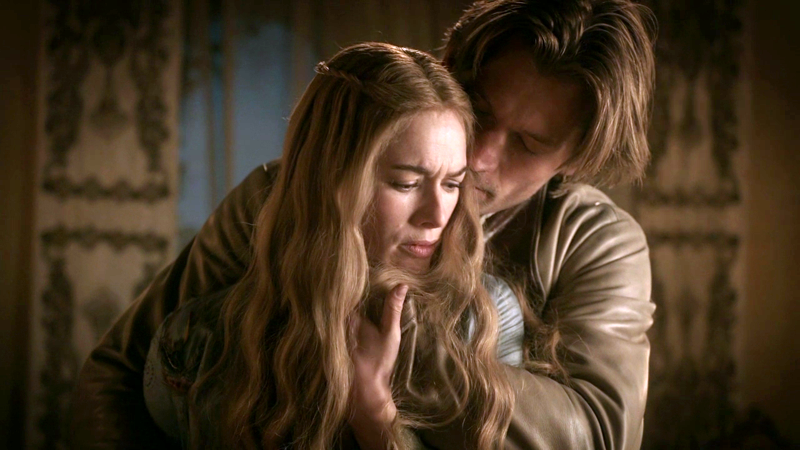
Jamie and Cersei at a hearing in the EP...


I would probably find it more believable if someone told me that Jamie and Cersei Lannister are lobbying the EU to legalise incest than Norway and Iceland :-) 


- The Netherlands is a country of gays and paedophiles. The Netherlands was the first country in the world to legalise same-sex marriages and is also popular for its liberal stance on marijuana use and, of course, prostitution. The Dutch government, its embassies and Dutch foundations fund a lot of LGBT initiatives around the world, including contributions to all gay prides in Sofia. In the narrow minds of extreme conservatives and Christians this makes the whole country worse than Sodom and Gomorrah. But my example - in 2013 the Bulgarian judiciary organised a seminar with Dutch experts on improving the workload of magistrates. A recently leaked letter from a high-level magistrate quotes his reasons to decline the invitation: "I see that there will be a Dutch expert. As you know, this country is ruled by gays and they also have a paedophile party, which is making its way to Parliament"... While there are open LGBT people in Dutch politics, none are in the government and you can hardly claim that the country is ruled by gays (of course the claim itself is preposterous enough). The mere existence of Association Martijn, however, allows all anti's to use it as "proof" that the country is infested with paedophiles (and by extension - gays). In reality, the association is not a political party, has hardly any support, let alone trying to make it to Parliament or have any sort of power. It's been banned and unbanned a few times and in April 2014 it was banned for good. But once the claim is out there - no one cares about these "details". The magistrate who refused to allow a Dutch expert to teach the "Orthodox, traditional-value" and completely rotten Bulgarian judiciary was awarded 40 monthly salaries upon his retirement in 2014. 

Lastly, I want to share my frustration with the campaign for EP elections in Bulgaria - if you listen to some of the candidates and their messages you'll get the impression that next year the EU will force every Bulgarian to marry someone of the same gender and then have sex with animals in front of kindergartens every morning... 

In the anti-prostitution discourse there are even more ridiculous but legit-sounding claims that seem founded in "carefully selected" research. Maggie McNeill has a long list of them in her blog and in the Washington Post and Dr. Ronald Weitzer more here
But to mention a few for my readers: 
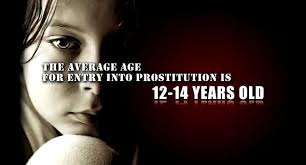
- The average age for entry into prostitution is 12-14 years 
As Maggie points out, this is first of all a mathematical impossibility because it suggests that for every sex worker who started at 20, there's one who started at 6 to 8... Or for every one who started at 24 there's one who started at ... 0 to 4. It took me five seconds to do the math but the myth is more important than the math... Anyway, it seems the myth refers to a study of the first sexual experience of minors. And minors are always below the age of 18 but myth or math - who cares, let's create a moral panic..
- In The Netherlands 50-90% of sex workers are forced. 
This is another commonly repeated lie because (apart from "the Dutch are always to blame":) it came from an Amsterdam city official in 2009 which was not based on anything but a simple guesstimate. In reality, a 2007 official evaluation on the lifting of the ban on brothels found out that around 8% of the interviewed sex workers said they had started under some form of coercion. Sex workers in the Red Light District will tell you that the forced prostitutes are even fewer than this. 
- More than half of Amsterdam brothel owners have criminal records. This is not one that's particularly pervasive internationally but I'm including it because of its utter distortion and absurdity. It was used in the reasoning behind the European Parliament resolution on prostitution from the end of February 2014. When real researchers actually bothered to trace this claim they found that: it wasn't about Amsterdam but only part of the Red Light District; it wasn't more than half but less than one-third; and the most spectacular one - it wasn't about brothel owners but about coffee shop (where they sell marijuana) owners... But when you start your sentence with "A 2009 study found out that..." and don't provide proper references, you can get away with it, even if you're a Member of the European Parliament. 


The anti's will always find rumours, hear-say or unfounded claims to further their agenda. Luckily, there are also always diligent researchers and activists who are ready to refute these claims, but once it's out there - most people react to the scandalous, the morally outrageous claim and can hardly ever be convinced that the reality is different. But of course - no victory comes easily... 


Tempters, homewreckers and sinners!

Now this part came a bit unexpectedly, I hadn't thought about it until I got into a sort of an argument in the comments of the blog post "Does legalised prostitution really increase human trafficking in Germany" on FeministIre. A certain georgefinnegan was one of few very vocal commenters against sex work. At first I thought the guy was just conservative or religious but from several different comments, something here, something there, I was left with the impression that he objects to prostitution because prostitutes sleep with married men, therefore they ruin marriages, therefore their job is a disgrace to society and traditions, therefore it shouldn't exist, let alone be legal (in a way it's a refreshing attitude not rooted in the "victims of human trafficking" or "violence against women" paradigm). In another comment, george had admitted to talking to a prostitute once, even flirting with her. All of this made me assume, whether correctly or not, that he actually wanted to visit a sex worker and use her services but didn't because of moral considerations (and I admire his level of restraint in the name of fidelity and marriage!). We also know, although I can't quote sources now, that the people who most vehemently oppose LGBT rights are often people who themselves have homosexual desires. I'm sure that, like me, a lot of gays and lesbians have had sex with married men and women but to shift the responsibility only to gays, lesbians or sex workers for people's infidelity is simply not serious - it's a two-way consensual and conscious interaction. People who want to cheat will cheat, be it with sex workers, people of the same sex, or their secretary or possibly anyone they come in contact with. Obviously we can't ban interpersonal communication to prevent cheating. And while with gays and lesbians these outside-marriage activities have the potential to cause romantic complications, with sex workers it's actually just a business transaction. But some straight and bi men and women prefer to have an easy scapegoat, which they can blame for their failed marriages/relationships instead of making an effort to understand what's wrong and work it out or leave and try to be happy with someone else... Someone had told me that this is why so few men actually support sex workers rights - because they are scared that they will appear to want to use sex workers' services (whether they actually do or not). Needless to say, in the same way in backward countries like Bulgaria, so few straight people defend LGBT rights, again out of fear of being perceived as gay/lesbian themselves. 

Friday, 11 April 2014

Prostituto - (some of) my views on prostitution, part 1

For my friends - don't worry, I haven't started prostituting myself. But I've been rambling about prostitution and the rights of sex workers on my Facebook profile and planning to write a post about it for a really long time... Anyway. Apparently the word prostitution comes from Latin and means something like "to put out, put forward". So I'd like to put forward some of my thoughts on prostitution. 

In my line of work (the anti-trafficking field) prostitution is an important topic - is it the root of all trafficking, is it work like any other, is it violence against women.. Our organisation and I (and all my friends,it seems) subscribe to the "work like any other" philosophy but in general it's a very polarised debate, which has been getting on my nerves unusually strongly lately. And then I realised why - the anti-sex-work rhetoric currently in Western Europe reminds me so much of the anti-LGBT rhetoric in my native Bulgaria, as well as in Russia, Uganda and many other backward countries and ... well let's admit it, in the more "progressive" countries until 10-20 years ago (and nowadays too). What I find  a bit confusing is that anti-sex-work "activists" are largely feminist organisations who also support LGBT rights but don't see their own hypocrisy in denying sex workers rights. As a gay man and an anti-trafficking activist, born and raised in Eastern Europe and living in Western, I'm exposed to both debates and I find them personally and professionally offensive. 

And since I've read so many good blogs, articles and arguments in favour of (the decriminalisation of) sex work and I feel I can't add anything new, I will here prostituto my thoughts only on the similarities (in my opinion) between anti-LGBT and anti-sex work rhetoric. And since this is largely just my ramblings, I won't cite sources everywhere, I'm sure the claims I look at here can be easily found on the internet. 

To be or not to be - this is a question... 
In the anti-LGBT discourse, the question of choice, of nature vs. nurture, seems to be very important. The anti's claim that we chose/decided to be gay, because it's "fashionable" (???), because of "the benefits" (???), because we wanted to be fabulous or I don't know what. The more "compassionate", "tolerant" and "progressive" anti's will say that maybe we didn't choose per se to be gay, but we were forced into it by the circumstances of our lives - controlling mother, absent father, bitch older sister, an unresolved Oedipus/Electra complex... So the hardcore anti's view us as perverts and untermenschen that should not exist, while the more progressive, compassionate and tolerant anti's view us as sick people, victims of our upbringing, sort of addicts, that need to be helped, cured, rescued from our own demons, whether by Jesus or specific treatment (preferably not at the expense of the state). Whichever the case, the implication is that since we chose our disgusting lifestyle and are choosing not to "turn" straight, we shouldn't complain that our rights are denied or not respected, it's our own fault and we should find a way to deal with it. 

As a response, the LGBT movement is desperately trying to prove that "baby, we were born this way". While both sides throw academic and medical research at each other to prove their points, I don't understand why if someone just decided to be gay (even if, let's say for the sake of the argument, for the "benefits" and the "fashion") he/she is any less deserving of equal treatment and non-discrimination. Even if I'm convinced that baby we were born this way, I'm also convinced that the question of choice shouldn't matter. People should simply be treated equally and have equal rights and that's it. 

In the anti-sex work debate, the question of choice is also very important, albeit in a different way. The hardcore anti's claim that all sex workers are forced into prostitution by violent pimps and traffickers, manipulative madams or even their own families. The more compassionate, progressive and tolerant anti's say that maybe some did choose to be sex workers, but they were just forced into it by the circumstances of their lives - poverty, unemployment, oppression, gender inequality, lack of other opportunities... The first mostly view sex workers as immoral, indecent, whores, untermenschen, and the latter - as victims who need to be rescued, reformed, whether by Jesus or well-meaning, all-knowing and all-powerful feminists. While I agree that for many sex workers poverty, oppression and inequality were among the reasons to enter the industry and these are certainly the root causes of human trafficking, I fail to understand why this makes the decision to undertake sex work any less valid. How is cleaning toilets, washing dishes or picking strawberries for 10 Euros an hour for 10 hours a day any better than selling sex for, let's say, between 50 and 200 Euros an hour (or more?), being your own boss, defining your own working hours, place of work or type of work and clients? If sex work is degrading (and again, I don't deny that it can be), at least it pays way better than other degrading jobs, like the ones mentioned above or even working at a f*cking call centre. The most blatant denial of the idea of freely chosen sex work came just last week from Mr. José Mendes Bota from the Council of Europe, in his report "Prostitution, trafficking and modern slavery in Europe": "...I had the opportunity to meet with Ms Pye Jakobsen, co-ordinator of the Rose Alliance, an advocacy organisation of sex workers from the major Swedish cities. [...] She told me ... that only a small minority of sex workers, perhaps 5%, were forced into it. [...] I believed her when she told me that most of the people she knows in the sex industry work voluntarily and out of free choice. However, I remain convinced that voluntary prostitution is only a myth." (my emphasis). Apparently sex workers don't know how things are, but anti-prostitution activists and CoE Rapporteurs know better. Yes.

It's for the children (tilt your head to the side)
A few years ago, a stand-up comedian (Kathy Griffin or so) said in her show that "it's for the children" and similar phrases (with a tilt of the head to the side) are used to justify just about anything anyone wants to push for. While I don't necessarily support the second amendment, this photo of Dr. Evil is a good illustration of the idea and there's even a Wikipedia article about how such phrases can often be used as a logical fallacy to pursue an agenda. When it comes to anything related to sex, like sex work or homosexuality, "it's for a children" becomes a hysterical shrill and if anyone dares speak out against it - well they must be either paedophiles or monsters! 

The anti-gay discourse often equates homosexuality with paedophilia. Russia's anti-gay (propaganda) law is supposedly meant to protect children from the decadent homosexual lifestyle and even from seeing any non-heterosexual people. Mr. Putin stresses that it's not illegal to be gay in Russia, gays have their bars and whatever, and the law is there simply ... "for the children" (tilt your head to the side). After all, it's okay to see tits and violence everywhere around but mind you, hearing a good word or seeing a gay role model is too much for their little heads. In Bulgaria I've often heard or read "How do I explain this to my children???" ("this" being two men/women holding hands or just a pride parade or, maybe in 500 years - that the child's classmate has two mommies or two daddies). Duh - how do you explain anything to your children - that the grass is green and the sky is blue, that some people are of a different colour and others speak a different language... The implication is, of course, that if children see gay people or hear that it's normal to be gay, they will automatically become gay themselves... 
And there's your logical fallacy - gay people are born in straight families and look at straight people holding hands and kissing and making out everywhere, every day, all day long, and still don't become straight, why would then any kid who sees a gay couple become automatically gay? NON SEQUITUR (does not follow)! 
Yes, Mr. Spock, when you say "it's for the children" (and tilt your head to the side) - logic is not necessary. 

While the anti-sex work discourse is usually in the name of women ("prostitution is a form of violence against women and an obstacle to gender equality"), I've noticed the use of the children "card" more and more often to push the anti-prostitution agenda. The anti-prostitution agenda in Western Europe at the moment is the promotion of  "end demand" initiatives and the "Swedish model" (for those who don't know - it suggests that the buying of sex, i.e. clients of sex workers, is criminalised, while selling sex, i.e. sex workers themselves, is not). I won't ask what Mr. Spock would say about the logic of selling something being legal and buying it - illegal, but will return to the use of the "it's for the children" (yes, tilt your head to the side again) rhetoric. It goes along the lines of "women and girls make up the overwhelming majority of all trafficking victims" or "prostitution is a system in which men pay to use women's and girls' bodies". Looking at the Eurostat trafficking statistics from last year, we can see that minors were around 10% of all identified victims. I didn't see (maybe I didn't look hard enough) a division of under-age girls trafficked for sexual exploitation, so I assume this 10% includes both girls and boys and I know that a lot minors are trafficked for begging, perhaps more than for sexual exploitation. Of course women ARE the overwhelming majority of identified trafficking victims (although I wrote in my first post about the difficulty in identifying victims of labour exploitation and that there may be actually more male than female victims) and even one girl trafficked for sexual exploitation is one too many. But it's clear that statements like the above only use the child card to generate more sympathy for their cause. What's even worse, though, is the way the child card is used to promote the Swedish model and other end-demand initiatives, suggesting that the criminalisation of clients of sex workers will reduce child abuse and child pornography. o_O NON SEQUITUR!

What did you say Mr. Spock? Yes it is, but say it to Commissioner Malmström, who in this recent video message says: "For a little ten-year-old girl to be exploited in the prostitution market, or for producing pornography, there has to be a client and there has to be a user". I'm sure the Commissioner knows that child abuse and child pornography are already criminal offences in the EU and have absolutely no connection to consensual adult sex work. But this example is apparently favourite for the European Commission. It was also given by Commissioner Georgieva during discussions on the Swedish model in the European Parliament in February. But when you say "it's for the children" - well, it must be the right thing to do... despite Spock's objections... 

To conclude this point: I'm not a psychiatrist but I'm quite certain that children simply cannot satisfy the sexual needs and desires of normal adults, whether they are gay or straight. From what I know, child abusers are attracted to the innocence of children and their young bodies. LGBT people and people who pay for sex have very different needs, including certain kinks, that they cannot get from children. So in both anti-LGBT and anti-sex work discourses, the child card is used to imply that children are in danger and to appeal to the "humane" part in us. Anyone who attempts to deconstruct this logical fallacy would be labelled a monster or child abuser. 


Part 2

I want to stress again that these are just my thoughts on the subject. I realise that sex workers, victims of trafficking, lesbians and trans* people have different experiences and may have a very different opinion from mine.